
FAQ – Frequently Asked Questions
Information for students, parents and teachers.
PART I – FAQ FOR STUDENTS (13+)
1. What is this project and why was it created?
It is a programme implemented in schools across the Świętokrzyskie Voivodeship. Its goal is to help students better cope with stress, emotions, relationships and difficult situations – both at school and at home. It was created to support young people, especially students from Ukraine and those who have experienced migration or difficulties related to changing schools or countries.
2. Who can participate in the project?
Every student aged 13–18 from a school that has joined the programme. The project provides direct support to students from Ukraine while also involving the Polish student community.
3. Is participation in the project paid?
No. All activities, classes, consultations, workshops and meetings are completely free. The costs are covered by the “Friendly School” programme and the European Union.
4. How can I sign up for support?
Simply tell your class teacher, pedagogue, psychologist or another trusted teacher. They will pass your request to the project team, and everything will be arranged for you.
5. Do I need my parent’s consent?
If you are under 18 – yes. It is a short declaration that your parent/guardian needs to sign.
If you are 18 or older – you decide on your own.
6. What kinds of support are available?
The project offers a very wide range of support. You can take part in:
- individual conversations with a psychologist,
- help in crisis situations (sudden problems, strong stress, conflict),
- workshops on emotions, communication, relationships and self-confidence,
- art therapy, drama-based activities, class integration sessions,
- digital hygiene training and safe internet use,
- activities on mental resilience, dealing with stress, hate, rumours and peer pressure,
- career counselling (planning your future, choosing school paths, preparing for a profession).
7. Can I talk to a psychologist in Ukrainian?
Yes. Some specialists speak Ukrainian. You may choose whichever language you feel most comfortable with.
8. Are conversations with the psychologist confidential?
Yes. The psychologist must keep everything strictly confidential. No one – teachers, parents or peers – will know what you talked about.
The only exception is a real threat to life or health, when the specialist must react to keep you safe.
9. What should I do if I’m having a crisis or a very bad day?
Go immediately to the school pedagogue, psychologist or your class teacher.
If you need urgent support, the project specialists can arrange help even the same day or the next day.
10. Can I join group workshops?
Yes. Many activities take place in groups, often in mixed Polish–Ukrainian settings. It is a good chance to integrate, talk and get to know others.
11. What will I learn in the INTEURO Youth Career Incubator?
You will explore your talents, learn about future professions, understand the job market, learn how to prepare a CV, resolve conflicts, build confidence and plan your education. The project also encourages active social engagement through NGOs.
12. Will someone at school know that I am participating?
Only the people who need this information to organise the support. Psychologists do not share the content of your conversations.
Parents learn only about the consent form (if you are under 18).
13. What if I’m embarrassed to ask for help?
That’s completely normal. You can ask your class teacher to contact the project team discreetly, write a message to the school pedagogue, or start with group workshops where you don’t need to talk about yourself.
14. Can I talk about war, stress or missing home?
Yes. This is a safe space. Psychologists have experience supporting young people who have experienced relocation, separation or traumatic events.
15. Where can I get more information?
Ask your class teacher, pedagogue or call the project office (contact details at the end — we also speak Ukrainian!).
PART II – FAQ FOR TEACHERS AND SCHOOL STAFF
1. What is the main goal of the project?
The project aims to strengthen the mental and emotional well-being of students, reduce tensions in multicultural classrooms, and support teachers in educational and intercultural work. It also includes integration, educational and career-related activities.
2. Who implements the project and what experience does the Operator have?
The project is implemented by the Association “Integration Europe – East”, which has been running the INTEURO Centre in Kielce since 2019. The organisation has over 15 years of experience in international educational projects and cooperates with more than 100 schools and local governments.
3. Does the school incur any costs?
No. Participation of schools, students, parents and staff is completely free. The project is funded by the “Friendly School” programme and by EU funds (FERS).
4. How does cooperation with the school work?
The school identifies its needs, and the Operator prepares an individual action plan based on the four support modules. A dedicated project coordinator oversees the cooperation.
5. What do teachers gain?
- group and individual supervision,
- training on work in multicultural classrooms,
- methodological support in difficult educational situations,
- consultations with experts,
- lesson plans, tools for teaching Polish as a second language, didactic materials,
- real workload relief thanks to psychologists working at the school.
6. Is the support intended for teachers of all subjects?
Yes. The project supports the entire school community: homeroom teachers, subject teachers, psychologists, pedagogues, librarians, specialists and school management.
7. What does student support look like?
Specialists conduct individual sessions, group activities, interventions, class integration, thematic workshops and developmental programmes. When needed, they can work regularly with the same groups.
8. Are all activities carried out at school?
Mostly yes. Some may take place at the INTEURO Centre in Kielce or online. Integration trips with students and parents within the region are also planned.
9. Can activities be conducted in Ukrainian?
Yes. The Operator employs bilingual specialists, which is especially important when working with students from Ukraine.
10. What about parental consents and documentation?
Collaboration is based on cooperation agreements and project regulations. Parents sign declarations; the school receives the full documentation package. Everything is compliant with legal requirements and does not burden the school.
11. Does the project disrupt lessons?
No. The schedule is arranged to minimise disruption. Activities may take place during longer blocks, homeroom hours or as additional sessions.
12. Can a teacher refer a student who needs support?
Yes, but parental consent is required for minors.
13. Will the school receive teaching materials?
Yes. A comprehensive “Friendly School – Educational Corner (Świętokrzyskie)” is provided: worksheets, diagnostic tools, lesson plans, guides (PL/UA).
14. How does the school sign the agreement?
Once accepted into the project, the school management signs a Cooperation Agreement defining the scope of support.
15. Are there activities for parents?
Yes. These include consultations, workshops, integration events, language support and parent support groups.
16. Can schools indicate their own needs?
Yes. The project is flexible and can be adapted within the framework of the four support modules.
17. Does the project include crisis support?
Yes. Psychologists are available for crisis interventions and can react quickly when needed.
PART III – FUNDING SOURCES
1. Where does the funding for the project come from?
The project is funded by public resources under the Government Programme “Friendly School” (Module 2 – school community well-being) and co-funded by the European Union through the European Social Fund Plus (FERS), Action 04.17 “School for All”.
2. Do schools bear any costs?
No. Participation is completely free for schools, students, parents and staff.
3. How long will the project and its funding last?
The project runs until 31 August 2027. Funding is secured for the entire period.
CONTACT DETAILS
Association Integration Europe – East
Project office: Sienkiewicza 78A, 25-501 Kielce
Phone: +48 573 338 377
E-mail: kontakt@siew.org.pl
The project is implemented under the Government Programme for Equalising Educational Opportunities for Children and Youth “Friendly School” in the years 2025–2027, co-financed by the European Union – European Social Fund Plus within the programme “European Funds for Social Development” 2021–2027, Action 04.17 “School for all”.

Other posts
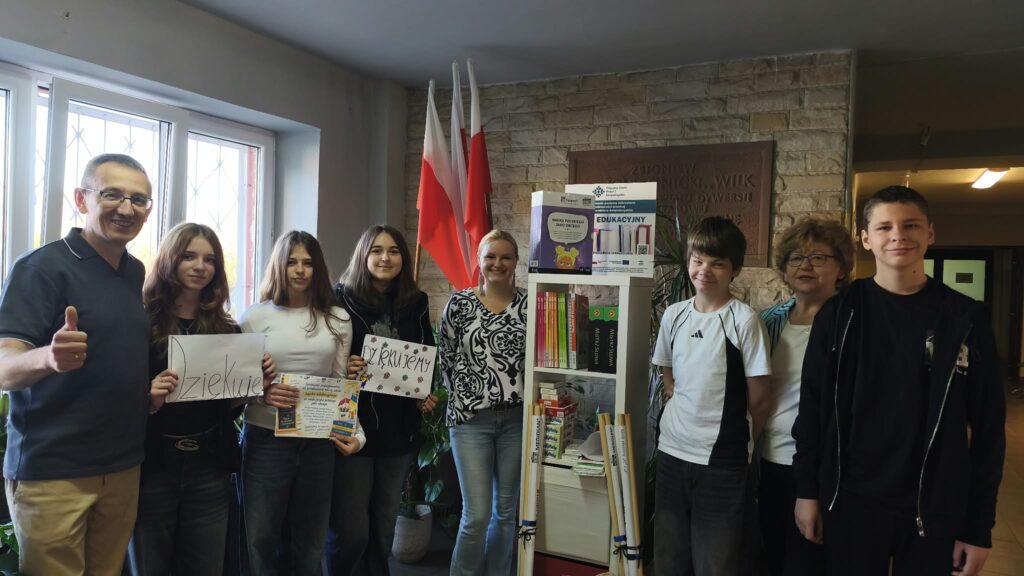
Learning Together, Building Closer Relationships. An Educational Corner at Primary School No. 18 in Kielce
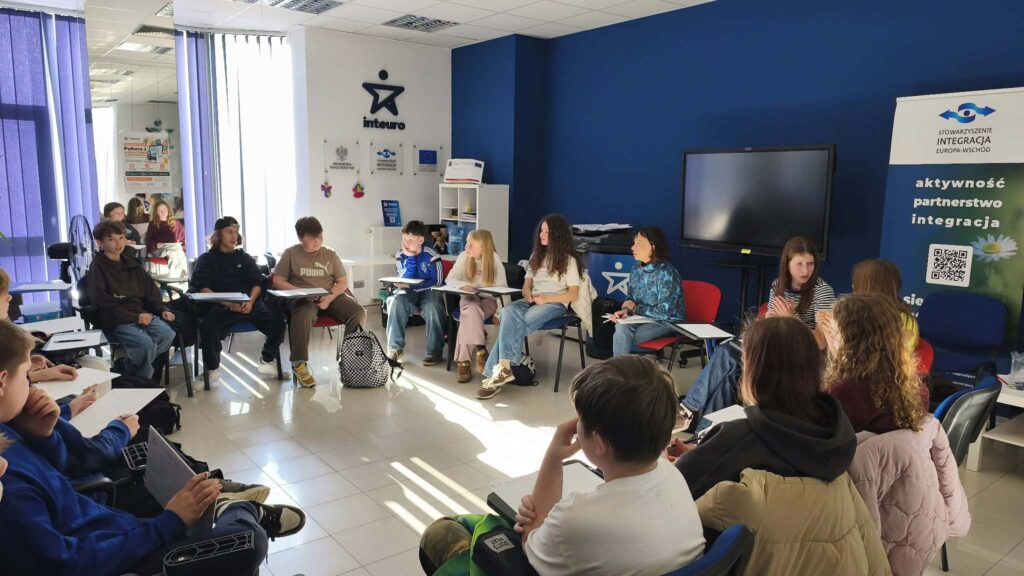
Be Smart Online: Workshops on Digital Balance
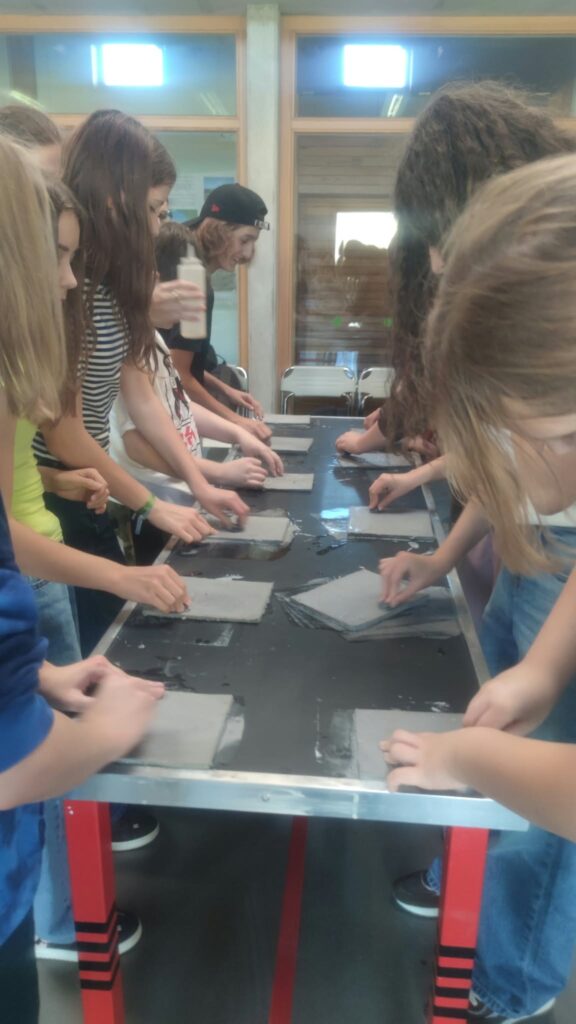
Discovering Kielce Together: A Trip for the Primary School No. 1 Community
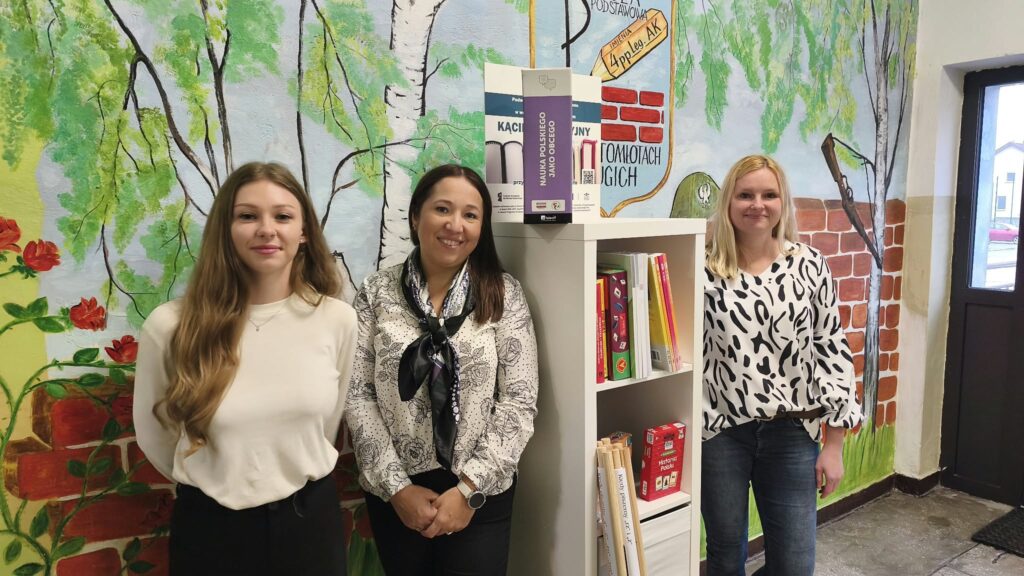
An Educational Corner for the School Complex in Kostomłoty Drugie
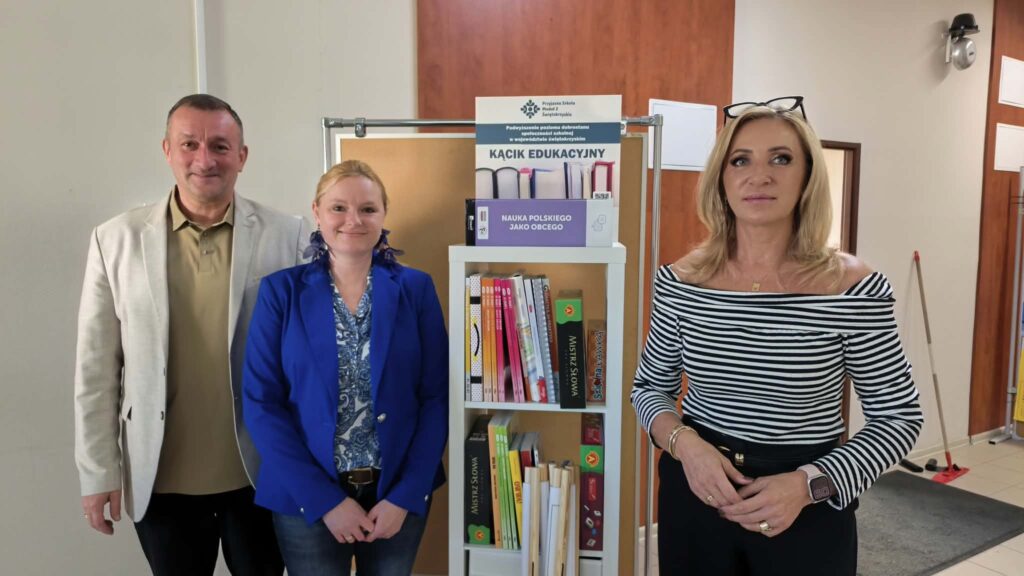
Educational Corner at Janusz Kusociński Primary School No. 32 in Kielce